Elina Shatkin
ICG (Usa)
May, 2004
View to a Kill
The Flying-Cam provides a bat's eye view for Van Helsing's second unit crew
Imagine soaring over the treetops of Transylvania, relentlessly hunting your prey for the delectably sweet taste of human blood. When Van Helsing director Stephen Sommers and cinematographer Allen Daviau, ASC wanted to convey the thrill and urgency of a winged vampire's pursuit, they turned to the Flying-Cam.
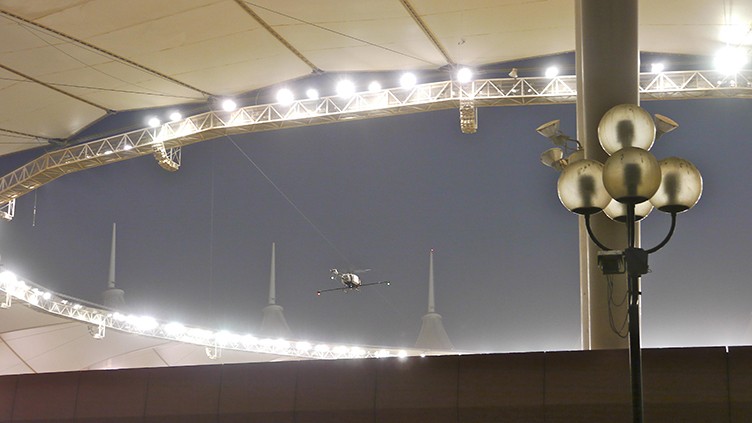
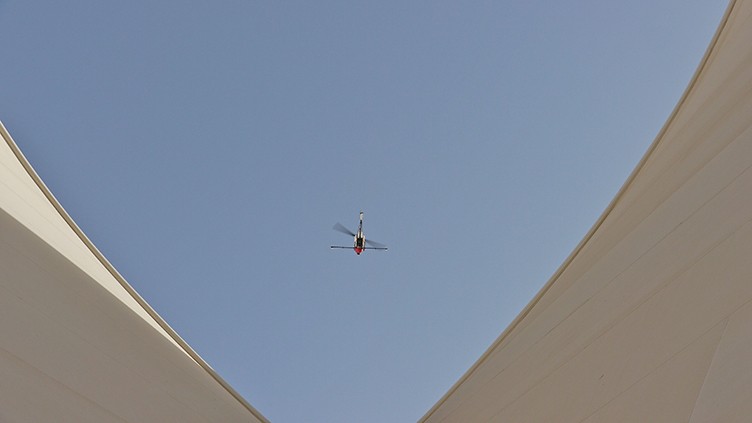
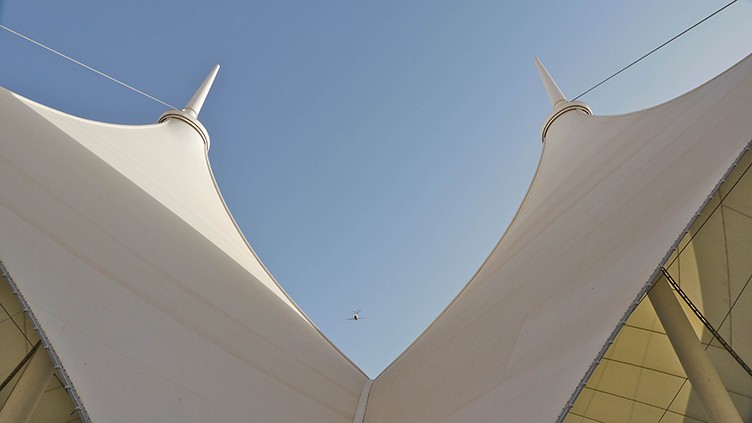
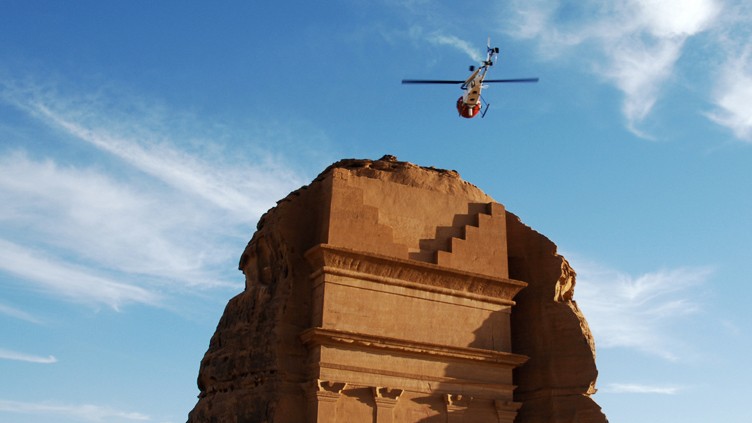
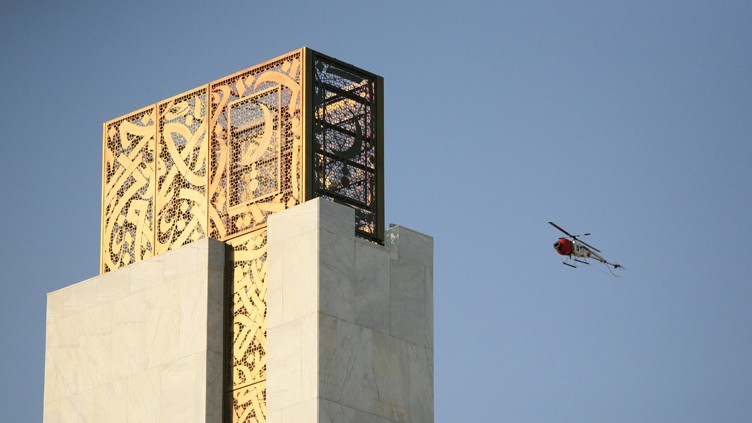
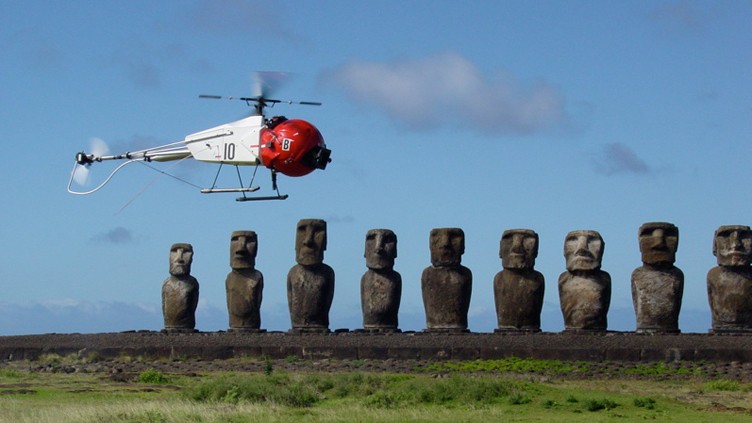
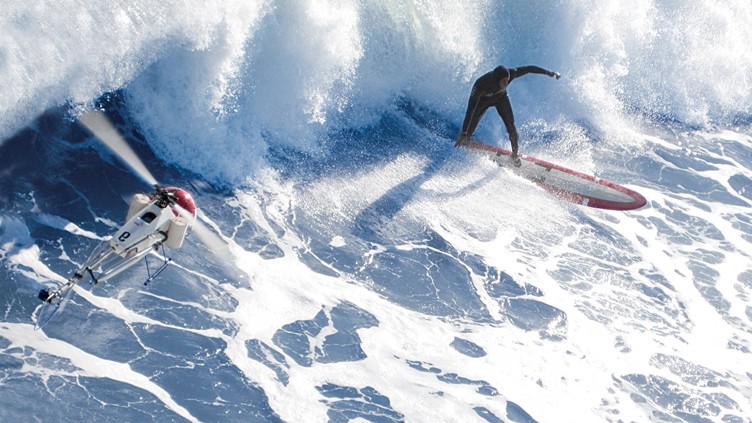
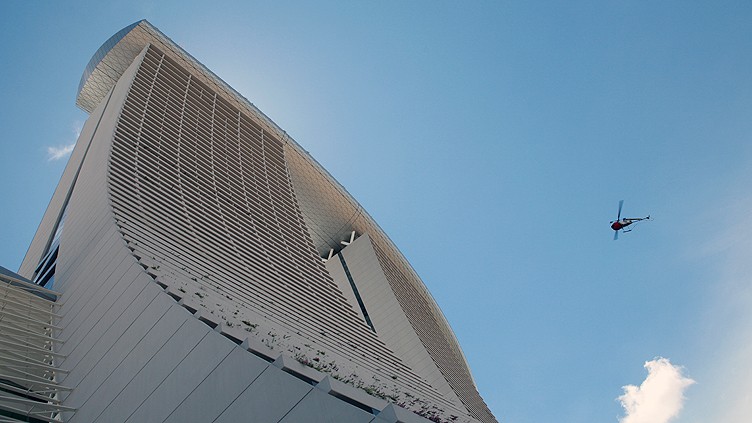
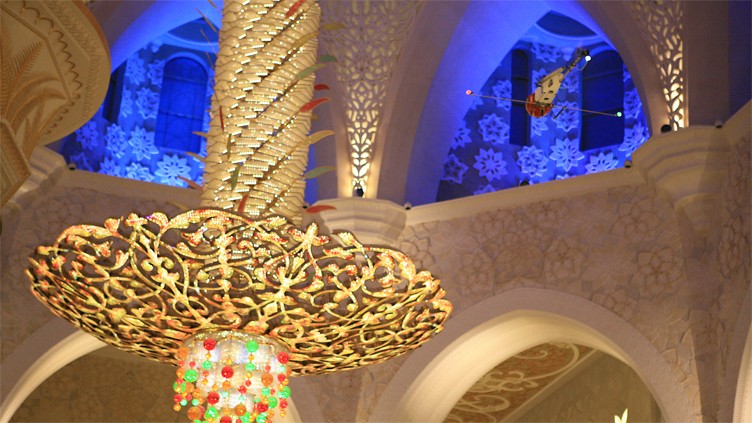
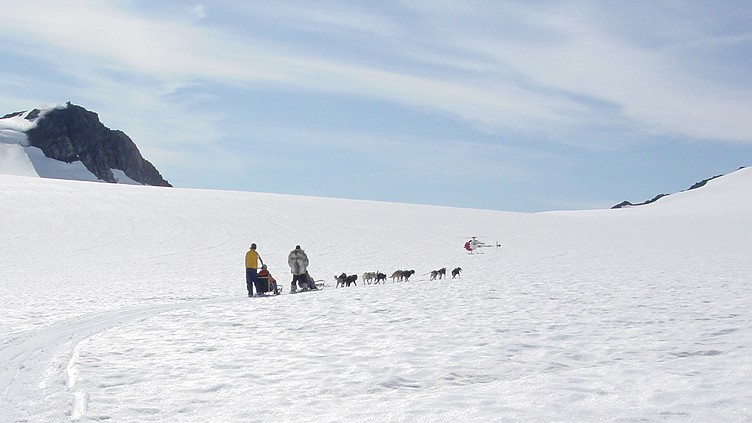
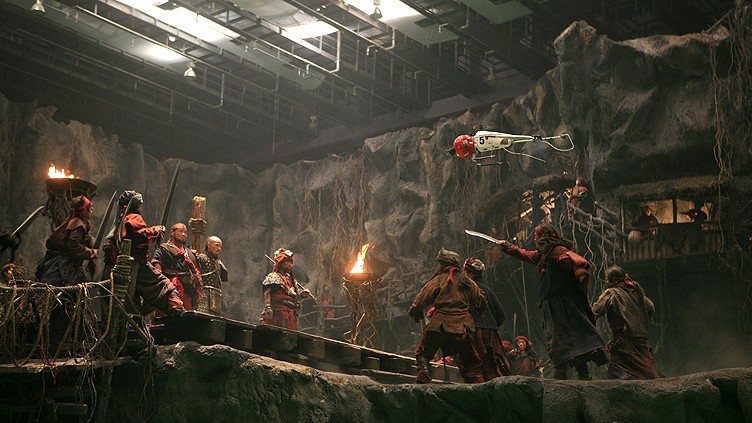
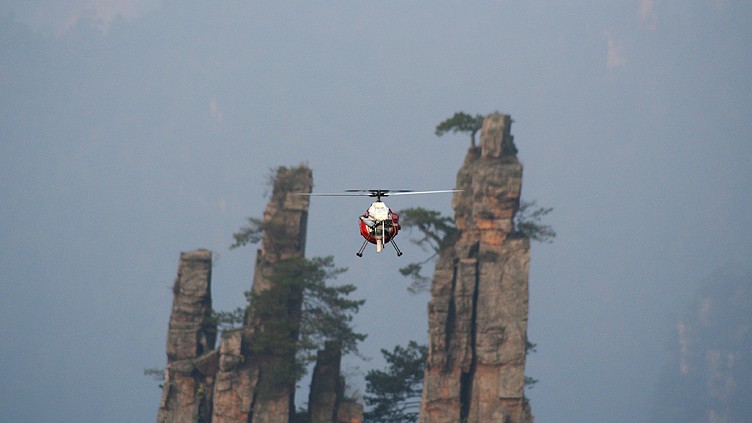
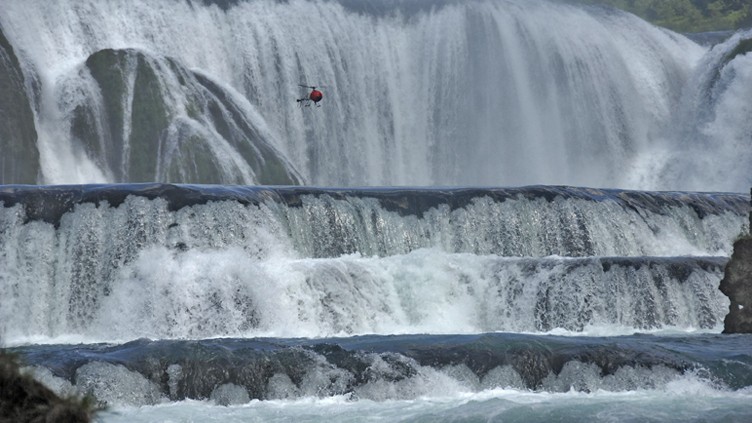
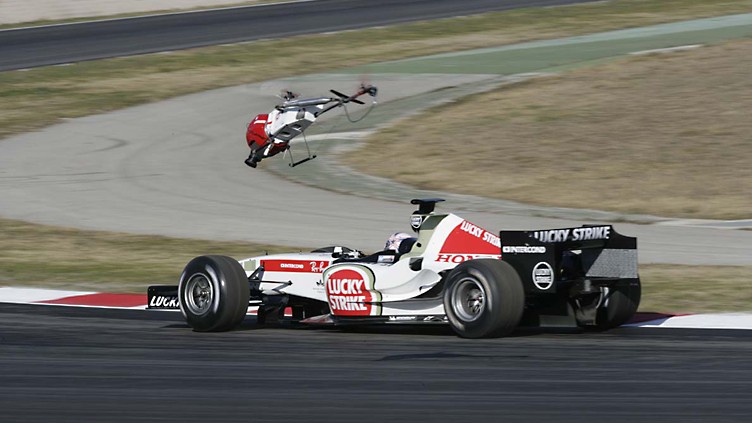
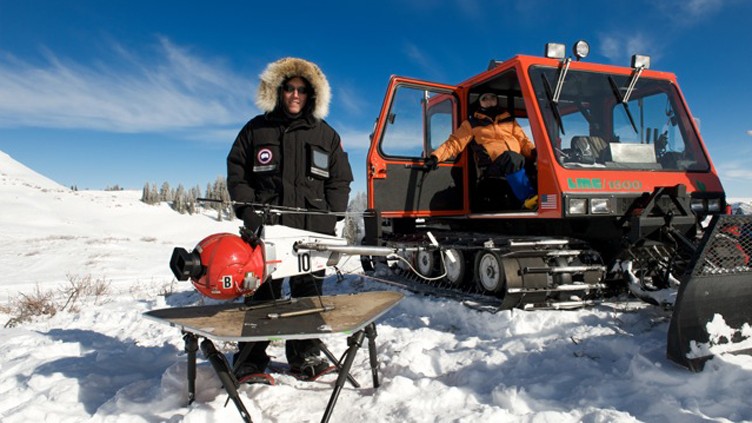
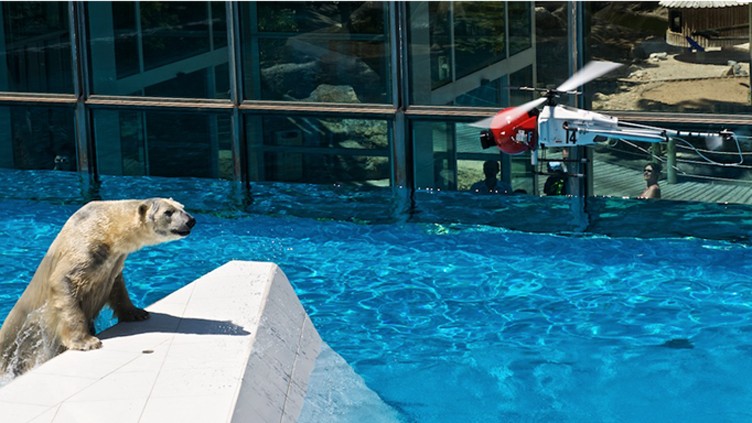
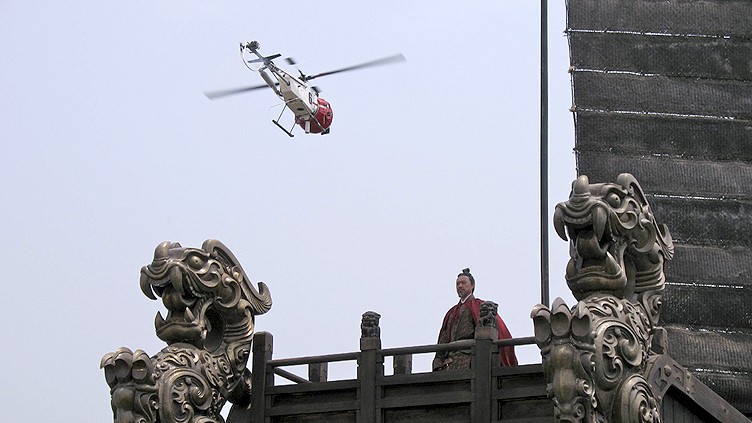
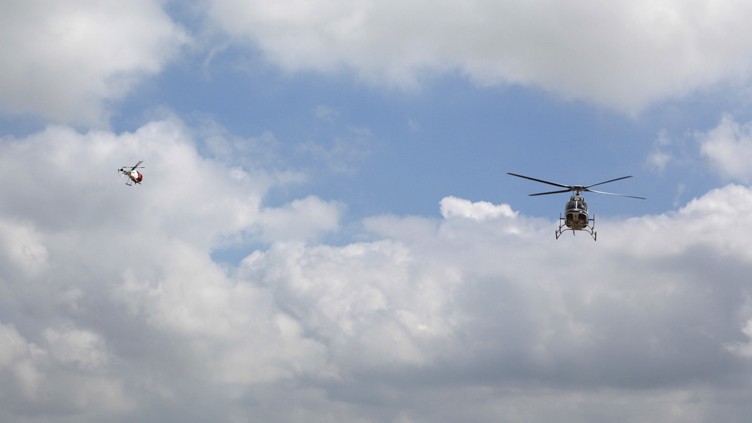
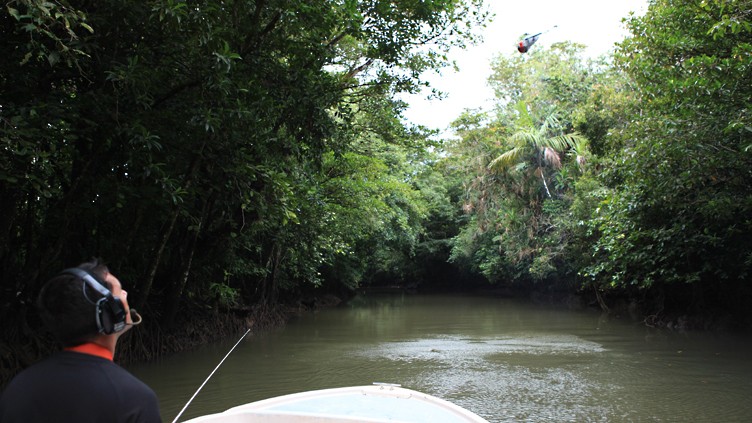
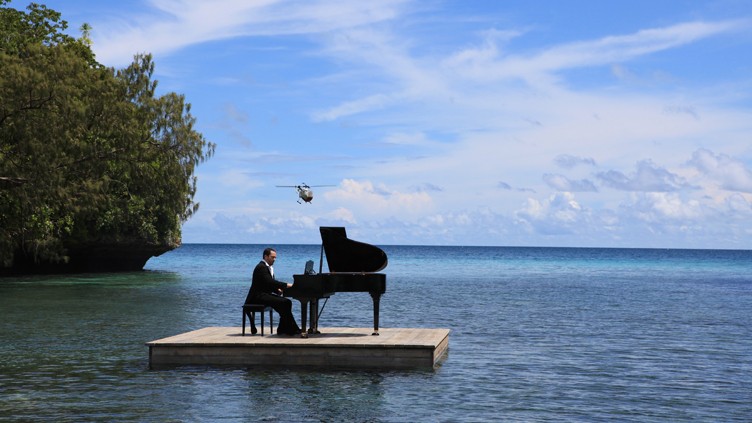
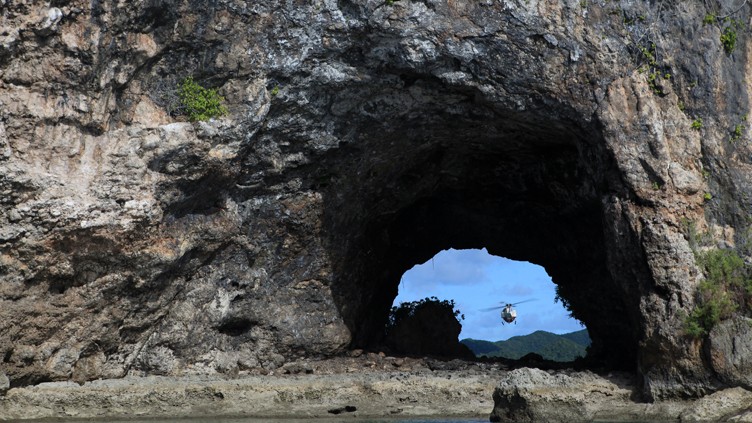
The Flying-Cam is a small remote controlled helicopter designed to carry a fully articulated 35mm motion picture camera. At only 6-feet wide, the platform is capable of flying close to hard-to-reach objects and through narrow corridors. It was invented by Emmanuel Previnaire, a Belgian with two main passions: aeronautics and filmmaking.
"I started to play with remote control airplanes when I was 12 years old," says Previnaire. "Later on, I flew remote control helicopters in official FAI competitions. You have complete freedom in the air, but you have to make very precise movements, all with the pressure of a jury that's giving you points for your skills. This was perfect training for the Flying-Cam."
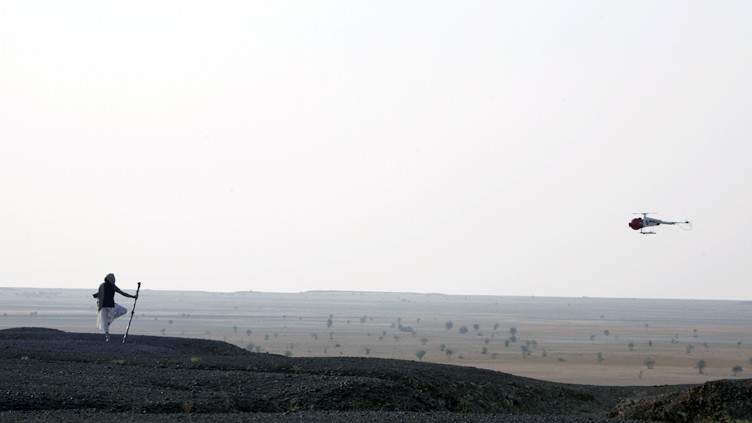
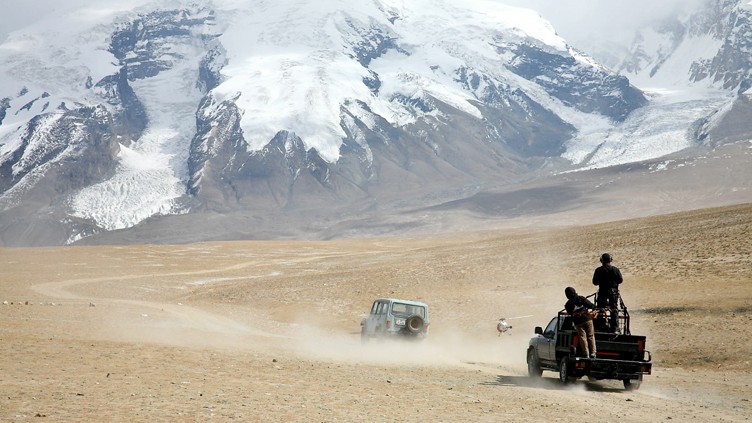
Before graduating from Belgian film school IAD, Previnaire earned a commercial pilot's license and was asked by an acquaintance to design an inexpensive aerial filming apparatus for an expedition in the Gobhi desert. This Flying-Cam became his thesis at the end of his studies.
"The combination of the two was for me completely obvious," he says. "The difficulty was that the technology wasn't yet there." Remote control helicopters were not capable of carrying the required amount of extra weight and there was no way to transmit video from the air to the ground because the average video transmitter was the size of a kitchen cabinet, weighed about 20 pounds and couldn't operate on batteries.
He built the first prototype in 1980 designing a small helicopter with a two-stroke engine and 5-feet diameter blades. Inside the helicopter, Previnaire secured the camera in a foam sphere that was fixed into a cradle. Before take-off, he would decide where to point the camera but on the ground, he could not see what he was shooting. Also, the rig was only capable of holding a 16mm camera.
Over the next two decades, Previnaire improved the design, putting the first video transmitter on board in 1985, developing a 35mm camera rig in 1990 and adding 3-axis capability in 1993. Along the way, he also started a company, appropriately named Flying-Cam, that now has 10 helicopter camera rigs (with five more on the way) capable of 16mm, Super 16, 35mm, Super 35, anamorphic and live broadcast transmission.
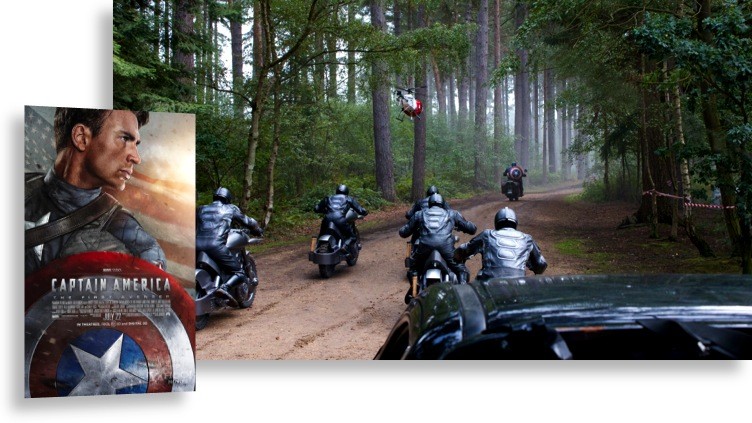
For the bat's-eye perspective in Van Helsing, second unit director Greg Michael and second unit DP Josh Bleibtreu envisioned a single continuous shot that begins high in the air, swoops down through the forest, flies through trees and emerges on a winding, mountain road chasing Van Helsing's horse-drawn carriage.
To prepare, Previnaire did a solo scout of the location, which is about an hour-and-a-half outside of Prague, approximately a month before the shoot. He mapped the terrain, checking for potential problems and established a wish list for the success of the shot.
Often, visual effects supervisors will provide a CG simulation to convey what they want. "On Van Helsing, we had very precise storyboards but no CG," Previnaire says. "There were very strict constraints because of the natural shape of that forest so we had to fly through holes in trees."
Just prior to the shoot, Previnaire arrived with the rest of the Flying-Cam team for two days of technical scouting. They had one additional day for rehearsals and they were ready to go.
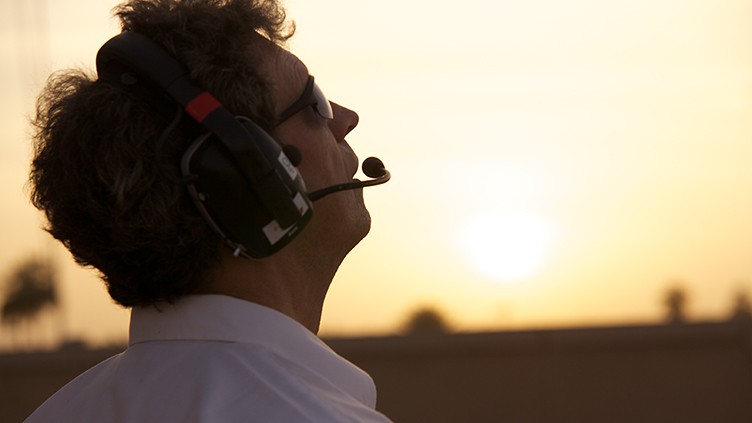
The Flying-Cam is generally operated by one pilot, who mans the helicopter, and a camera operator, who controls the panning & tilting of the camera, but because of the obstacles blocking the view during the 1,000-foot shot, two pilots in relay were required. The first pilot, Bruno Ziegler, was positioned on a tall crane, 150-feet off the ground and was responsible for the first half of the shot where the Flying-Cam is soaring above the trees. The second pilot, David Storey, was positioned in the canyon, to control the end of the shot, where the camera chases the carriage, which was traveling at about 20 MPH.
Camera operator Timberlake Lewis was positioned on the ground with the director, the cinematographer and Previnaire, all looking at a video monitor. "In terms of difficulty, I'd rank this pretty close to the top," says Lewis. "We're talking about 180 crewmembers on set and any time you have that kind of pressure, you don't want to waste a lot of set time. The rehearsals helped us be precise. Also, this one was so clearly storyboarded."
The camera on board the helicopter is a mix between an Arri IIC and an Eyemo, but with everything redone. It can maintain steadiness up to 33 FPS, according to Previnaire, and carries a 200-foot load. They generally shoot with wide lenses, in this case an 18mm, making focus a non-issue. The POV shot on Van Helsing was done slightly off-speed, at 21 frames-per-second, to give it a dynamic effect.
"We were trying to keep it as organic to the flight path of the creature," says Lewis, "so there was a little, but not much swooping and panning." The most difficult aspect was trading control of the plane from one pilot to another, which had to be precisely timed.
"I think this was a perfect application of our platform because the shot is a point-of-view of a flying character," says Lewis, who describes the Flying-Cam as a way to translate the language of flight into the language of film. In that sense, the shot in Van Helsing (comprising only 15-30 seconds of screen time) succeeded on a grand scale. |
 |
Pictures
(click to enlarge)
|